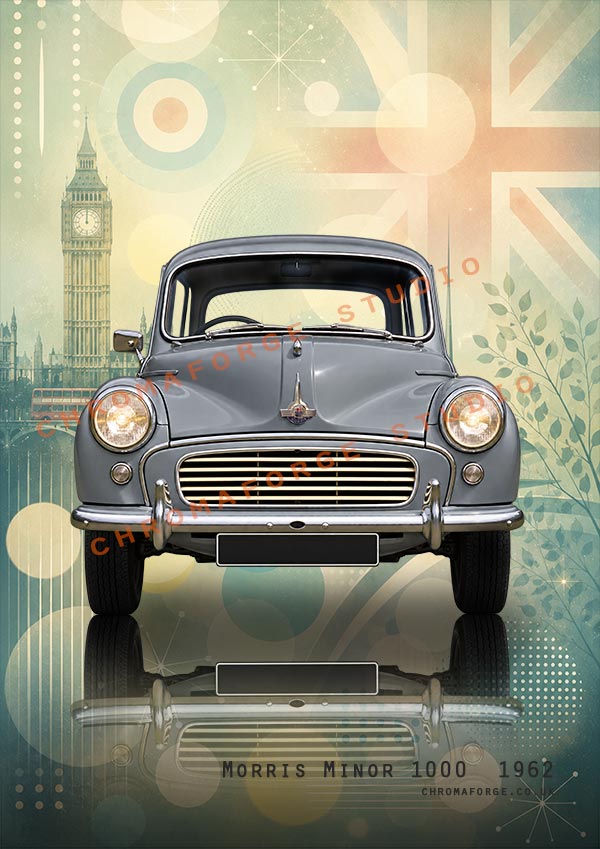
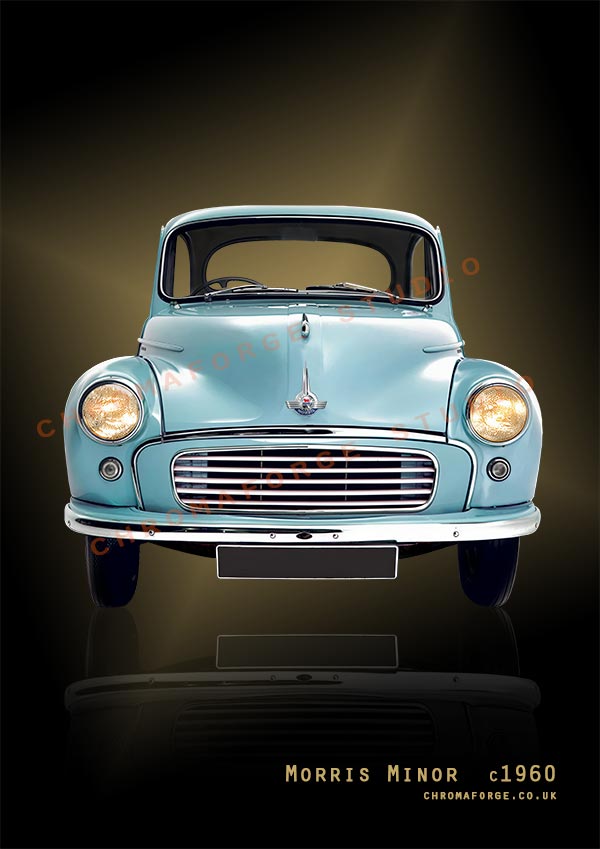
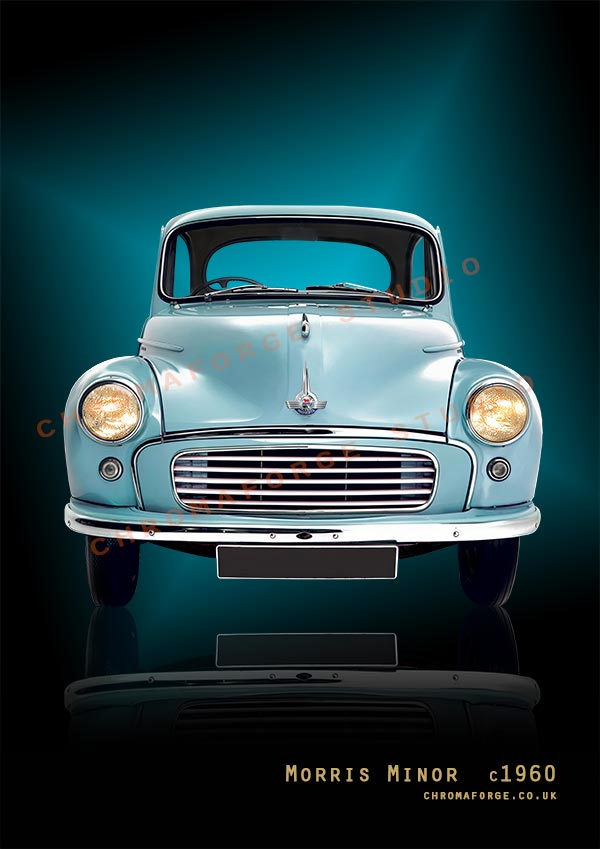
By 1960, the Morris Minor had evolved considerably from the original car created by Alec Issigonis and unveiled at the 1948 Earls Court Motor Show. Now known as the Morris Minor 1000, it retained the wonderfully recognisable shape and character of Issigonis's design but had become a more refined and established part of everyday British motoring. The early Lowlight's headlamps had long since migrated into the front wings, while the original split windscreen had been replaced by a larger, curved one-piece screen — giving the familiar Minor face most people remember today.
Built at Morris's Cowley works in Oxford, the Minor was exactly the sort of car that could be asked to do almost anything. It served as family transport, the daily journey to work, the shopping car and the means of escaping to the seaside for the annual holiday. Its relatively compact dimensions disguised a remarkably useful interior, while Issigonis's original insistence on making the car wider than initially planned gave it a reassuringly broad stance that remained an important part of its character.
The Minor's appeal extended well beyond the traditional two-door saloon. Four-door models, convertibles, the much-loved Traveller and commercial versions made it a familiar sight in virtually every corner of Britain. By the beginning of the 1960s it was no longer simply a successful Morris — it had become part of the landscape of British life.
And 1960 marked an extraordinary milestone. In December that year the millionth Morris Minor was produced, making the Minor the first British car to reach one million examples. A special run of commemorative Minor Millions followed, celebrating an achievement few could have imagined when Issigonis's unconventional little car first appeared twelve years earlier. For the 1960 Morris Minor 1000, familiarity hadn't yet become nostalgia — this was still very much Britain's everyday car.